

01 · Overview
A fashion store, built solo
NexCartia is a fashion e-commerce store with two sides. Shoppers search and filter a catalog, pick sizes, fill a cart and pay by card. The store owner uses an admin dashboard to manage products, orders, coupons and customer messages, and to read sales charts.
This was my own project and I was the only engineer. I owned it end to end: the design, the frontend, the API, the database, payments and deployment. The code is public on GitHub, and the store is live on Vercel.
- Solo build
- Design to deployment
- Public repo
02 · Problem statement
A real checkout, not a demo
Many store demos stop at a cart page, or trust whatever total the browser sends. My first version from 2024 had the same gaps: the client could influence what the server believed, a query parameter could stand in for who was asking, and search and reviews were thin.
In 2026 I reworked the store to behave like a real one. The server decides prices and identity, and an order exists only if the payment really went through. Shoppers can narrow a catalog quickly, and only people who received a product can review it.
- Server-side trust
- Real payments
- Honest reviews
03 · Architecture
Two apps, one HTTP contract
The frontend is a React single-page app built with Vite. All server data goes through RTK Query, with one slice per backend area, while the cart and the signed-in user live in plain Redux state. The backend is an Express API over MongoDB with six route groups: users, products, orders, payments, dashboard and messages.
Both sides cache. The API keeps frequent reads in memory and each write deletes only the entries it affects; on the frontend, each change refetches just the data it touched. Signing in sets an httpOnly JWT cookie, the server checks Google sign-in tokens with Firebase itself, and product photos go to Cloudinary.
- RTK Query
- Cache invalidation
- Cookie auth
04 · Shop filters
Filters that count honestly
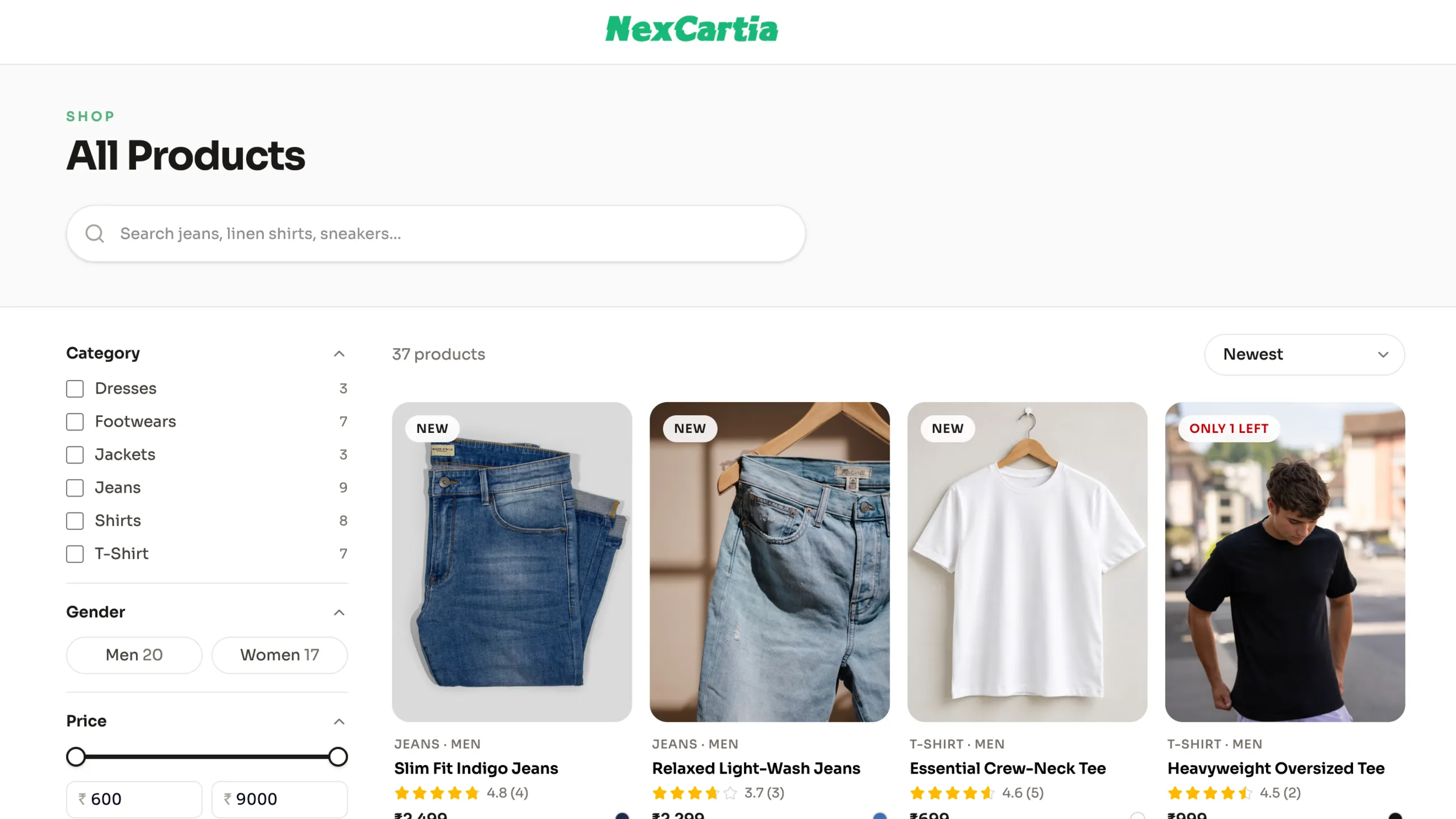
The shop page keeps every filter in the URL, so a filtered view can be shared, bookmarked or reloaded. Shoppers filter by category, gender, price, size, fit, colour, rating and stock, and can sort the results. A separate endpoint counts every option in a single MongoDB aggregation.
Each option's count applies every other active filter but not its own. Ticking "blue" doesn't drop the other colours to zero, so shoppers can still compare before switching. The option lists are identical on the server and the client, so the two can't disagree.
- URL state
- MongoDB aggregation
- Faceted search
05 · Build
Making checkout tamper-proof
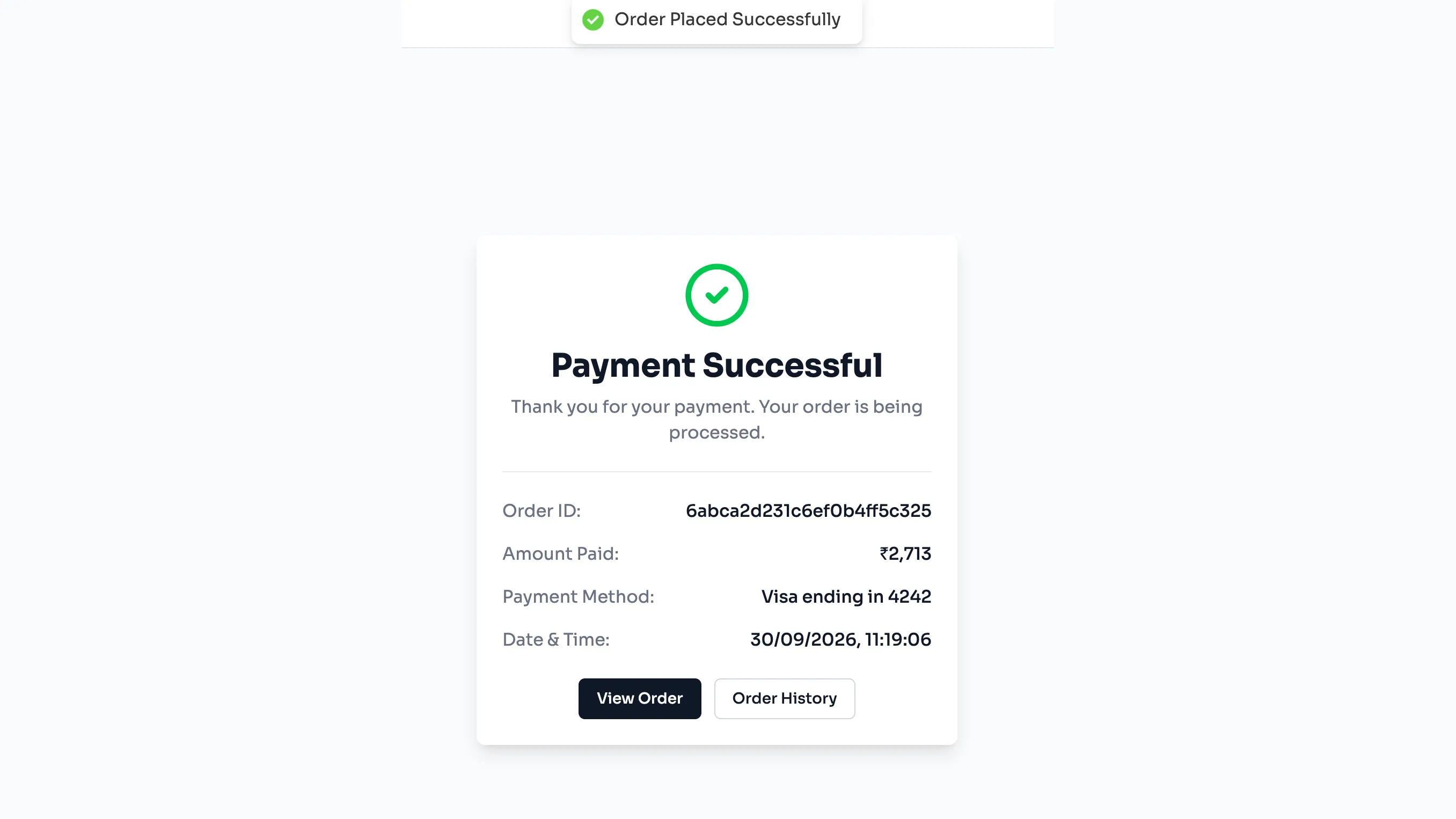
The hard part was trusting nothing the browser sends at checkout. When a shopper pays, the server loads live prices, checks sizes and stock, applies the coupon, works out tax and shipping, and creates a Stripe payment. The totals and a fingerprint of the cart are stored on that payment.
To save the order, the server fetches the payment from Stripe and checks that it belongs to the caller, succeeded and matches the cart fingerprint. Order totals come from the payment, not the request, and each payment can create only one order, so a retry after a network error returns the existing order instead of a duplicate.
- Stripe PaymentIntents
- Server-side pricing
- Duplicate-safe orders
06 · Project results
A complete store, designed to deployed
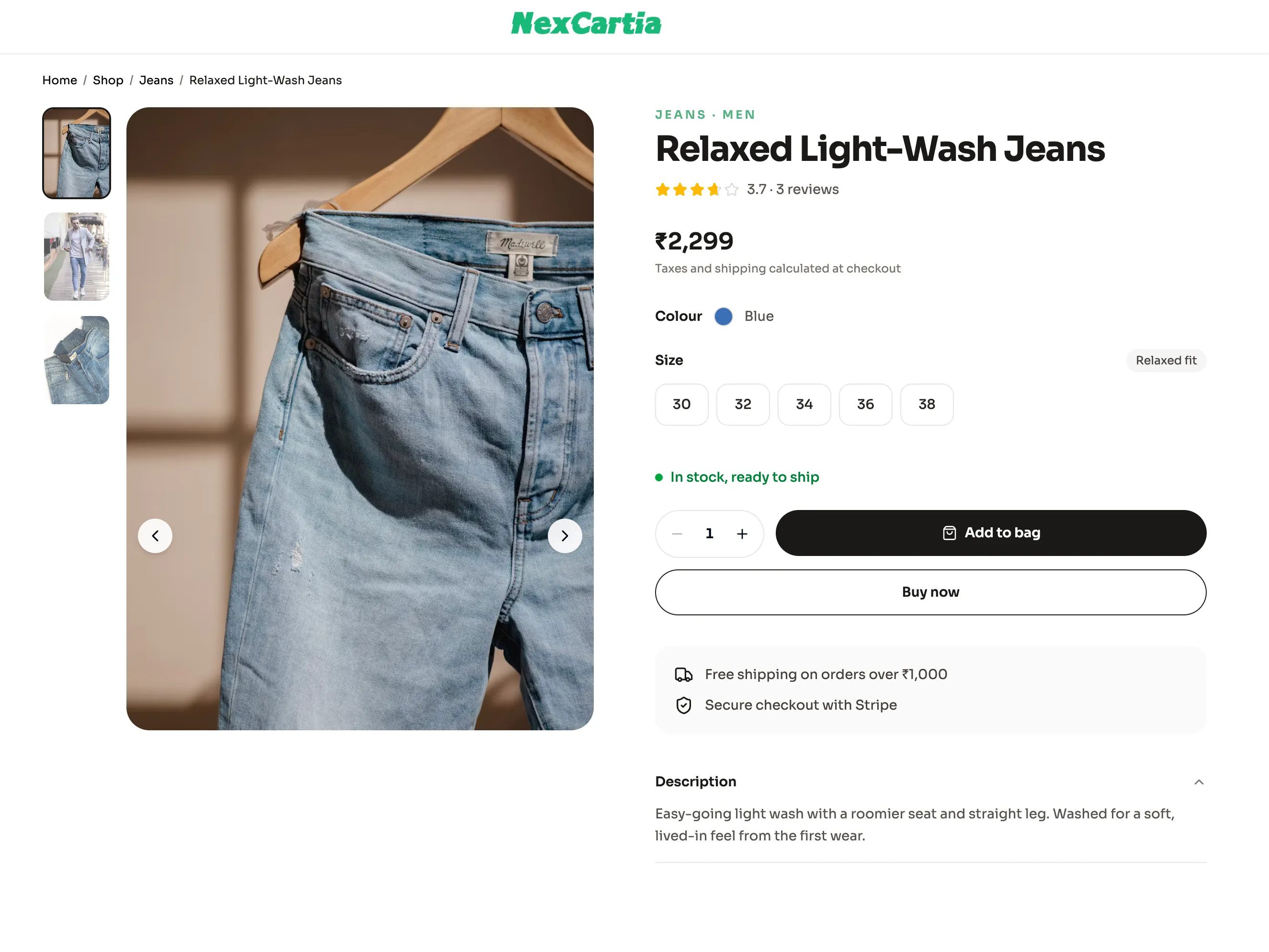
I shipped 27 screens for shoppers and admins, backed by 41 API endpoints and 4 integrations: Stripe, Firebase, Cloudinary and MongoDB Atlas. The store is live on Vercel with the API on Render, and the full source is public on GitHub.
- API endpoints
- 41
- Screens across two roles
- 27
- Third-party integrations
- 4
What shipped
- Designed, built and deployed the storefront, admin dashboard and REST API on my own.
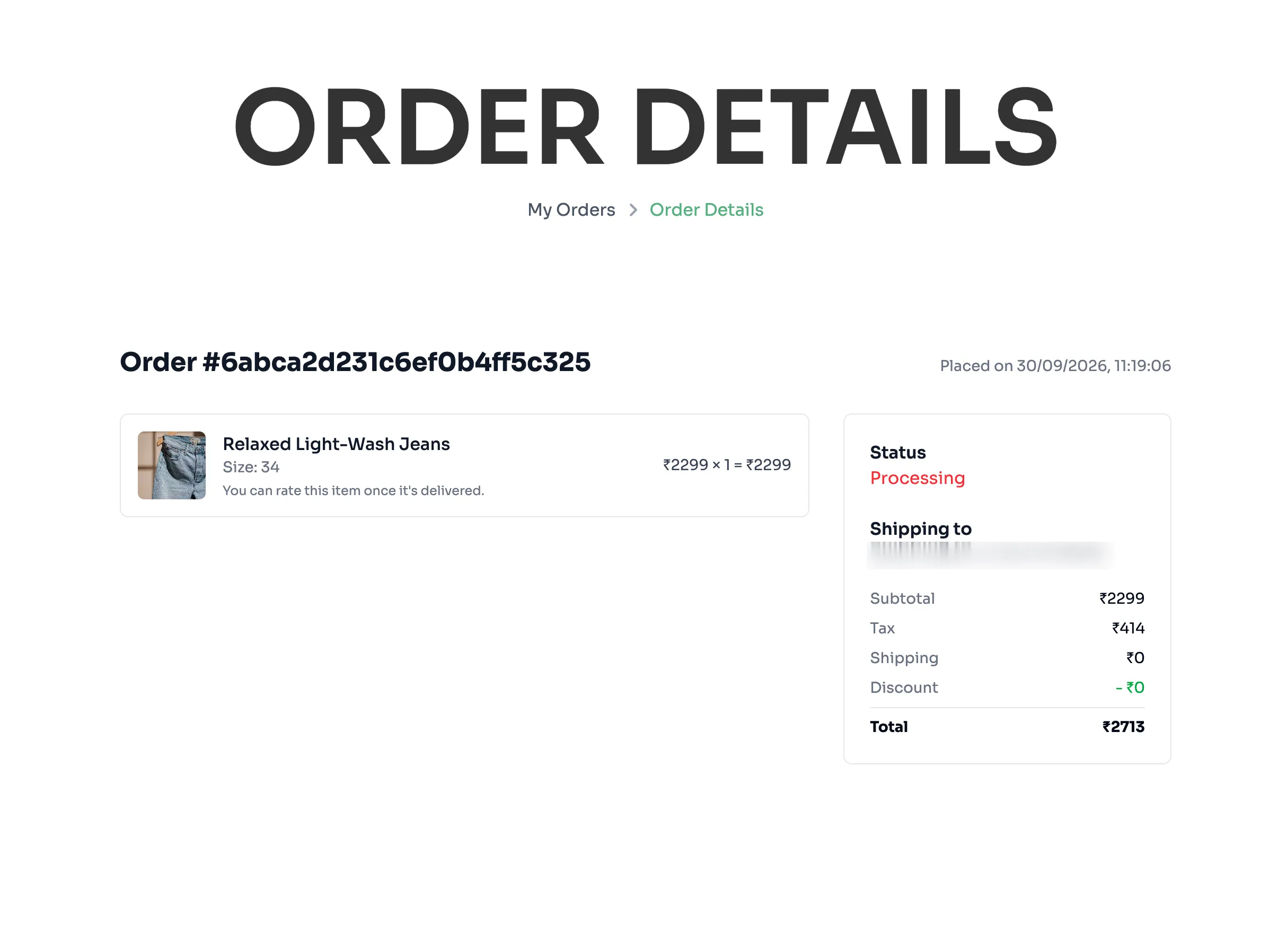
- Built Stripe card checkout where the server prices the cart and saves exactly one order per successful payment.
- Built a shop page with shareable URL filters for size, fit, colour, price and rating, each showing live option counts.
- Added star reviews that open only after an order is delivered, with each rating shown back on the order.
- Built an admin dashboard with sales charts, product and order management, coupons and customer messages.
- Deployed the frontend on Vercel and the API on Render, with a GitHub Actions job that keeps the API awake.